Inside

Showing posts with label zahirwakhi. Show all posts

Sunday, April 29, 2012

Past: Lahore

Sabir in his first year in Lahore, Residence: a cubic with Naseer bhai

This is in Makah Colony, near Firdous Market. Sabir was relatively new in Lahore, it was my 3rd year. Here, we stayed with Naseer bhai, a very respectful and helpful brother. 

Those days I did not let grow my hair longer than 1/2 a inch. Memories are sweet :)

Saturday, December 31, 2011

1988 & 2012: an equidistance journey to and from millennium 2K


In 1988, when I was born, I was 12 years away from the new millennium and in 2012 I am again merely 12 years away from the new millennium.

The difference off course is nothing but the morphological changes.

Today I ponder over an amazing topic, a question and the most romantic idea: “I want to become a (profession) when I grow up.”

It’s amazing when you hear from children about the future profession they want to choose. It feels as good to hear as to imagine the child one day achieving that professional career that s/he utters. I never knew (neither did I inquire) about my future ideal as a child. May be my school teachers would remind me. I do remember that by grade 8th I would reluctantly respond to the question “what is your future plan?” with “doctor”.

Time slipped and so did matriculation. Perplex with the option of deciding between Pre-Engineering and Pre Medical, I consult few of the best career counsellor and professionals and somehow cling to pre-engineering. Well, to their question “what is your future goal?” I respond, “I guess I want to study management sciences... or maybe I want to become a doctor... no I feel like becoming an engineer...”

Finally, I am in Lahore and in the first day of the college our Urdu professor sir Tahir Masood asks a million dollar question during an introductory dialogue. “Please one by one introduce yourself: your name, your region, your school and what do you want to become?” Why would the teacher ask us our future plan? Doesn’t he know that we are pre engineering students and we will become engineers? My heartbeat has already raced off, as I for the first time in my life hear the words “Electrical engineer, Mechanical Engineer, Civil Engineer, Electronics Engineer, and Computer Engineer” while students in the front row respond and Tahir scribbles every detail on his file paper.

It’s my turn and I haven’t yet decided my specialization in engineering, I speak “...I don’t want to be an engineer (50 students and the teacher startled at my statement fix their eyes on me) but, I want be academician and I plan to do PhD in Physics” This was brilliant; it not only surprised the audience but myself. Now the biggest joke to share with you all, the same year I drop physics in examination.
 
Well, this is 2012 and I stand here with a degree in my hand. I am not a doctor, neither an engineer. It is as if I have done everything and yet nothing. While I travelled the first half of the equidistance to the year 2000 with my parents and teachers, I wandered in the next equidistance journey from 2000 to 2012 on my romantic ideas. That made the 24 years of my life. I do not regret for not having a clear goal all these years, I wish to start anew, with clear and defined path for the rest of my life.

Happy New Year- Happy 2012


Towards a destiny with clear road map

(P.S. I loved art and Architecture)

Saturday, December 24, 2011

A wish for Pakistan, A wish for myself


As the nation is about to celebrate the 135th birthday of Quaid e Azam Muhammad Ali Jinnah, many initiatives are being carried out for commemorating the day. One such initiative is taken by Dawn Newspaper where people are invited to the forum to participate in "Tell us, tell the Quaid" discussion.The least I could do was to think of a competitive strategy for Pakistan, I find the idea and material in the brainstorming and thought provoking exercises conducted by the honorable teacher Dr. Farid A. Malik during our academic program.


Pakistan has a geostrategic location, rich with natural resources. The current situation of Pakistan is very critical. The country has the greatest proportion of youth population and it has traveled 63 years with a consistent problem of political leadership. This translated itself in the institutional structures and became the basis for indifferent citizens. Religious institutions got misused and fundamentalism and militancy strengthened.

In such a scenario competitive strategy for Pakistan shall primarily focus on youth development programs. Its investment in education sector will be a building block for the nation’s development. This shall include reaching out for the rural populations, reforms and improvement in technical education and development of uniform curriculum that encourages critical, intellectual and conceptual thinking.

Furthermore, institutions like Scouting and students’ political bodies shall be extensively launched. The blend of well designed practical approach curriculum will produce well informed political thinking. Moreover, scouting will help in cultural, religious and ethnical interaction to saw the seed of pluralism in the hearts and minds of the youth. This will address today’s religious fundamentalism, extremist religious rhetoric and ‘winning the heart and mind of peoples’ issue.

The next level strategy shall focus on exploration and utilization of the natural resources within our country. From natural resources I mean the fertile soil, fuel, water, fruits, gem stone and others. There are several coal mines including the Thar coal mine to be efficiently utilized as fuel source. Water is not scarce in Pakistan, but lack of proper planning cause draughts and floods in case of fluctuation of its flow. So dams and systematic control of water from macro to micro level will not only save water but also improve agriculture, stop or reduce the effect of natural disasters related to it. Health issues will also get under control.

The third competitive strategy for Pakistan could be suggested as transforming its foreign policy to have flexible and diplomatic relations with all its neighboring counties. This should include acting as a gateway for central Asian countries for trade through the sea routes. Also, it will be in the favor of Pakistan to create genuine bilateral relations with India. Pakistan could open the doors for investment and business for India and advance in technology instead of military advancements.

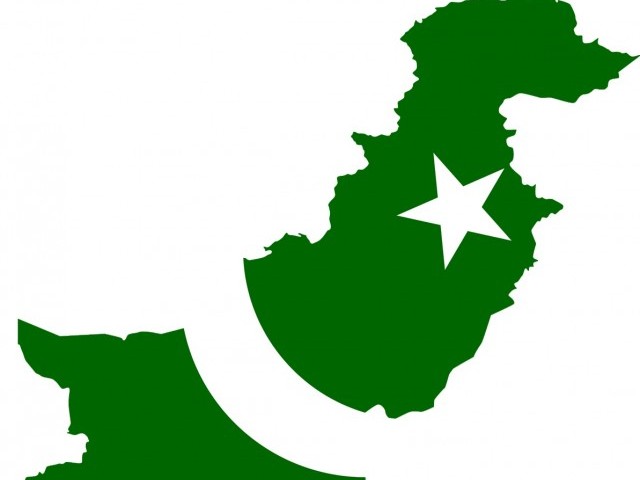
Pakisatan
To conclude, the youth of Pakistan in this turbulent time are the asset as well as liability of the state. Investment in them will automatically translate itself into skillful, enlightened and tolerating leaders. Pakistan will be a model for pluralism and peace rather than terrorist labeled state. Our focus on the strategic location and its invaluable resources can help us grow the business activities by providing opportunities for investment, and industries like the tourism industry to flourish. 


I wish to be part of the team for railing back Pakistan on the track of prosperity and peace. My wish on the Quaid's birthday.

Saturday, December 10, 2011

The Yarzrich Episode


They are Wakhi (Xik) guys.They went to Chapursan Gojal to collect their resources. When they reached Yarzrich late night, Mir. M Nawaz tells us how Sabz Ali was able to open the house of Uncle Muhammad Zia. Then there is the a glimpse of the fun they had. Irfan goes on with his little philosophy of 'terr terr terr'.

While the video seems fun, nevertheless it captures a memorable episode of the travels and events of the guys, which indeed will remind others of their activities while traveling.

I hope you enjoy watching it.


Wednesday, October 12, 2011

Importance of volunteerism in organization


Volunteerism has been defined by Ishikawa that it is the free will to act. Volunteerism has many benefits to the institution and individuals constituting it.

Firstly, the characteristic of being proactive emerges and flourishes in individuals. They identify any improvement areas or effective means for work and, share it with the company. Therefore a company has high probability of success.

The whole idea of volunteerism in an organization is to inspire human beings to act rather than motivating them by coercion. Workers feel more responsible and dedicated towards their jobs, and they work with creativity. On the other hand people not willing to participate in organizational activity other than their duty feel no burden of extra work. Hence an organization can retain good workers and provide them with opportunity to be part of the development process.

Besides the routine and mechanic work, volunteerism in a company provides room for social and humanistic interaction. This has effect on the overall environment of an organization as workers find it more lively and fun. Moreover, it promotes respect of humanity and gives chance to the workers of various departments to know and understand their problems through Quality Circles for instance. Therefore, in an organization workers are able to identify and improve flaws in various different departments.


Written on 25-01-2011  (New Product Development course with Dr. Farid A. Malik) 

Saturday, October 8, 2011

Experience-Lesson a proximity


There are exceptional moments in one’s life which can never obliterate from a person’s mind. Specifically speaking, moments of joy from childhood, that of teenage games and sports and other extracurricular activities as a youth are few moments to cherish in every one’s life. And the interesting part, that enthusiasm dose not repeat itself later. While doomed by few momentarily unimportant realities I flip pages of my diary and encounter one piece of writing which was written keeping a specific topic in consideration that goes like…

Unforgettable moment of my life

In reference to the given topic, people may present an account of a special occasion or a day that appeals to them too much. But, rather than a particular occasion or a day, I have chosen an extended two months period i.e. April and May, of each year 2004 and 2005 of my life to be an unforgettable moment. During the year 2004-05, I was doing my secondary education from AKHSS Gilgit and at the same time I was a resident of Shah Karim Hostel, adjacent to the school. These were the months when we were given self-study break for our final examination and, it was the routine during the vacation which made the whole span an unforgettable moment of my life. Firstly, I used to get up when the Azan for Fajr was called. After offering my prayers in the prayer hall, I would go to the woods at the back of the hostel, with my Islamiat course book. For 1 hour I memorized verses from the Holy Quran. Secondly, I usually did my breakfast on my way back to my room from the woods at 6:45 am. Then, my next spot happened to be the bank of Gilgit River, which passes along my school and hostel campus. There I sat under the shad of a shawl (which I made to avoid direct sun light) and studied my course books. Time and again I used to place my foot in the flowing water to get rid of boredom or, I simply stood on the giant stones by the river from where the beauty of the city could be seen. I could see sitting there people playing and swimming at the other side of the river. Furthermore, having achieved my targets by 2:00pm I would take lunch. Afterwards, I rested for at least an hour and 30mins. By 5pm I preferred either to play cricket or go to the old gymnasium for exercise. After 6pm I used to offer my evening prayers and have dinner. During the night I studied till 12:00am and finally rested peacefully for having a contented day. This routine repeated it self and, it gave me a feeling that I never found anywhere. Thus, became my unforgettable moment of life.

The question is why not now? For a mature person things should be easier as compared to his/her childhood. Sometimes childhood offers great lessons.

Thursday, October 6, 2011

Steve Jobs is Alive


Steve Jobs is dead, mentions the news. My eyes catch a glimpse of the statement and they keep going back and forth. Really? 

"Jobby" a sound appears from my unconscious, we are all in a group and a guy smiles as he approaches not knowing how to react to the call. This is another beautiful day at college, and it has been quite inspirational semester. A series of lectures has been devoted to entrepreneurship in Marketing course, and directly or indirectly the valor, courage, vision, inspiration and 'out of the box approach' example has served by one extraordinary man, Steve Jobs. Our professor Mannan Amin (a Stanford Graduate himself) did everything to familiarize us with the legend's technological revolution. Our energetic fellows started the Forman Entrepreneurial Association and I remember exploring and discussing the marvels of Steve Jobs in one of the formal sittings.

As we strolled towards the hostel, Rizwan Javaid is the center of arguments. Because, for us a small group in an academic institution somewhere on the globe, Riz was Steve Jobs. We called him Jobby, not because he invented some technology resembling Apple, but for the inspiration we had taken from the legendary man. We made him part of our friends circle, we stayed with him, we dined with him. We aspired to become like him and follow his footsteps in professional life. 


Now tell me how a legend can ever die. He is present everywhere, with every student he has inspired, with every person who has loved his innovation and with every teacher who has explained many things through one phenomenon: Steve Jobs of the century.

Monday, October 3, 2011

Interview with OEC

Recently a short interview got published on the website of "Organization of Educational Change (OEC)". OEC also publishes an educational magazine the Educure. Their aim is to bring social change via education in Gilgit Baltistan. The not for profit organization is run by students of GB studying in various universities of Paksitan.

The interview explores me as a boy scout.

Here is the link for the interview:
OEC Blog: An Inspirational Boy Scout

Wednesday, June 1, 2011

Respecting Diversity for Loving Biodiversity


While closing the chapter of Baccalaureate program of my life, ‘Life on Earth’ became miserable.  Partially due to the knowledge relating to biodiversity, ecosystem, all sorts of pollution and their impact on people, and mainly because of the assignments, 8:00 am lectures and Friday dummy laboratory works. And, because of my coincidences with the major presentation this course ‘Life on Earth’ with Professor Dr. Hamid Saeed turned into a thriller. The first lesson started with Biodiversity, and I would later know that 22nd May is celebrated worldwide as a Biodiversity day.


Photo Courtesy:ifoam

“Biodiversity is the variation in the life forms within a given eco system, biome or on the surface of earth”.[1] Discussing biodiversity, therefore, would have required us to firstly understand variation in only one form of life, living in a particular biome and, there could be no other interesting specie in comparison to human beings. Because our habitat is Pakistan, it would be easy to discuss and comprehend diversity in the homo-sapiens of Pakistan.  Now I guess that is what at least our professor had in mind while giving us opportunity to write on ‘diversity related to social and cultural lifestyles in Pakistan’.


Photo Courtesy: cultural classics


Diversity related to social and cultural lifestyles in Pakistan refers to the notable heterogeneity in the country’s environment, scratched my pen on the blank paper. Therefore, to speak of diversity would mean to discuss every aspect of the diverse ethnic, language and religion, I thought.  As I wrote, a pattern emerged in the deep corner of my mind that led me to expose the diverse aspects from the lens my experience, ranging from variation in ethnicity, lifestyles, cultures and their interaction. And, my pen didn’t stop…

Photo Courtesy: Mango Grove

Imagine a small town in the extreme north of Pakistan, adjacent to China border. Let’s name it Gojal, with population of 25000 people, scattered over a vast area in tiny villages, and let’s name their language Wakhi. Would you be appalled to know that these Wakhi people share their language with other clusters living in China, Afghanistan and Tajikistan? Will it seem interesting to see them celebrate their wedding in unique way lasting 5 to 7 days, and the many rituals based on seasons, for e.g  Kithdheet (Welcoming spring),Taghm (marking the start of harvest), Chineer (marking the time to collect harvest)?   But, that was how my childhood world appeared. All I knew was that people either have to grow small scale agriculture or run small enterprise or become teacher to earn and educate their children
.
Soon life started changing when I learned Urdu and English at school with our teachers.  It was at school that I came to know about English speaking people via our foreigner teachers. All I knew at this stage was that Pakistanis are like us the Wakhi people and Pashtuuns (who came there for business) and the rest of the world is like English speaking people I met in school.

Hunza hat salesman


PhotoCourtesy: concordiaexpeditions

Then at the age of 15 years I got exposed to a world beyond the homogeneous society of Gojal, to experience the more challenging diversity of Gilgit town. Interaction of five different languages of Gilgit-Baltistan namely, Wakhi, Shina, Balti, Brushaski, and Khwar was the uniqueness in this diversity. Another aspect of the diversity was the exposure of different faith group students and people, who gave a rich insight of the various beliefs. But, it was here in Gilgit that I could see the same diversity translating into sectarian clashes and thus alarming us of the sensitive aspect of diversity.

“Ethnicity of Pakistan is generally described in terms of the geographic and administratively defined areas of Punjabis, Sindhis, Pashtuns and Balochis.[2] Upon my arrival in Lahore in 2005, I sank into the stream of the language of people spoken by “44.15% of the countries population”: the Punjabi language. The experience was enthralling as I came across people with flexible behavior and attitude who loved fun and entertainment and had acceptance for other people. The language itself was easy as it resembled Urdu. I found Punjabis to be staunch consumer of sucrose, their unique breakfast either is ‘Halwaa Puri” or “Naan Chanay”, and they love spicy food.

The other two ethnic groups whom I met here were Pahtuns and Balochis. Both had their own unparallel and different characteristics, like athletic activities, cohesiveness and friendly nature. In terms of celebration, while Punjabis made “Bhangra” at every music beat, Attan of the Pshtuns rocked the parties, and occasional Hareep from Gilgit-Baltistan took them to the dance floor.

Surprisingly, in Lahore the class difference could be seen clearly. While I was only aware of the term poverty, but now I could see it with my own eyes. While I had seen rich people in films and fiction novels, but it was here that I saw this faction of our society. Therefore, an evident “high culture” and “Low culture” became practical knowledge for me.


Photo Courtesy: Hindukush Trails

Turning to the most unique diverse experience in the cultural and social lifestyle of Pakistan, non other than the Kalash people have imprinted their lifestyle on my mind. Situated on a high valley of Chitral called Bambureth, the town constitute of people known to be the offsprings of Alexander the Great. Their colorful ornamental dress, rituals for marriage and for death at their temple and their unique living style is one of its kind in the whole world.

In conclusion, like the very variety found in all sort of organisms on earth, human beings themselves have unique diversity among each other. While diversity is strength in reality, but due to its sensitivity it could also be fatal. Being humans it is therefore our responsibility to protect our own specie along with the whole biodiversity. The unrest that we see in today’s Pakistan or any other human society is not the real face of the individuals living there. They carry with them a whole beautiful and diverse pattern of life, which we need to respect and protect. Only then can we make the ecosystem suitable and safe for the biodiversity.


[1] Wikipedia
En.wikipedia.org/wiki/biological_diversity
[2] Curtin University of Technology
Representation of Cultural diversity in Urdu Newspapers of Pakistan. Jawad Saeed.

Monday, May 30, 2011

Gilgit Baltistan Traditional Dance by Formanites


Keeping alive the long tradition established by Gilgit-Baltistan Formanite students, a grand farewell party was arranged for the Senior batch of 2011, by their juniors. While the event  had many colorful parts including the flashback and memory sharing by seniors, delicious food, and photography, but it also included this one amazing segment of traditional dance,  to keep in touch with our identity & enjoy in lively way.

In this segment you watch dancing two seniors of 2011 batch, Zahir Shah (Me myself :)) and Najeeb Ullah (Sarkar) the great wakhi companion of my 4 years.

"We thank the lovely GB Formanite community for honoring us and providing us with opportunity to present a local GB dance."

I hope you will love watching it, remember to provide comment :)

Video Credits: Mujeeb Alam
Copy Rights: Gilgit-Baltistan Production

Special Thanks to: Hassan Abbas, Shah Faisal, Mujeeb Alam & Malik Zulqarnain for making this possible, and Ali Barcha (The DJ) for providing us with the video, & the whole junior batches.

Note: No copyright infringement intended. The video is being posted by the owner's permission.

Wednesday, May 25, 2011

Confessions of an Economic Hitman (Book by John Perkins): In a glance, The Review


The Economic Hitman (EHM) narrates his fate in the world stage as a puppetry of the modern power seeking tool; the company. John Perkin, one of the paid hitman makes a confession regarding the role of American institutions in the world economical, political and social order. EHM are professionals who are hired, trained and paid to serve the interest of American policy via giant companies like MAIN, at a cost indispensably shocking and higher to the third world and developing countries including Ecuador, Panama, Indonesia, Saudi Arabia, Iraq, Afghanistan, Iran and many more. These countries go through a folly of exaggerated economic forecast, rigged elections, exploitation of natural resources, murder and sex business staged under  the shadow of economic development.

It all starts with the will of the secret agencies, who are the real drivers of the cult institutions that work for the creation of a global empire. Once John Perkins is in their spotlight the recruiters spend no time in gathering his life account to treat him in a way that he becomes their ‘slave’ for life. The book thus gives a vivid illustration of the constraints of individual liberty and the role of powerful factors other than the self in deciding our destiny in life. While Perkins gets an offer for service in MAIN with the hope of getting a luxurious life but, the real face of economics shows up to him where instead of market forces it would be Perkin himself who will decide the sketch of Indonesian economy. Therefore, the first lesson to Perkin and all is that as far as America and its Institutions get their ‘fuel’ to keep their engines running, it is by all means incumbent on any targeted nation to act in the opposite direction of what would keep them sovereign. For example, if communism is working for them, replace them with puppet democracy or autocracy with the masters being the Americans or depicting how certain decisions would boost the economy of a targeted country where as in fact the decisions will deteriorate their economy.

The progress of an employee in general and an economic hitman in particular depends upon the extent of deception promoted by them. With a successful role played in Indonesia, Perkins gets the role of inquisitor, but at the same time Howard Parker who is adamant in putting forward false electricity forecast data gets fired. Instead, in order to distort the truth in the best possible way to serve the companies in their best capacity people like Perkins (EHMs)  get promoted and that is what Bruno the vice president of MAIN did. And latter the same business graduate man i.e. Perkins, got the role of the Chief Economist under the role of EHM.

The world empires and government are built and demolished purely based on how much the interest of the companies is served. That is how the Shah of Iran suffered in the 1970s in the hands of Teddy Roosevelt, when he did not agreed to the terms and conditions set with the USA. While the one man in Panama: Torrijos, was stubborn in his determination to help the poor people of his country and even made negotiations with the condition that his people will benefit, these people are the least desired breed of rulers for the companies seeking their own survival on others blood to promote their national interest. So were the people like Fidel and Muammar Gadhafi of Libya. And in the international politics therefore, it is not just what the people of certain country want their leader to be, but who the EHM, the Jackals and the Army of the US want to see.

The game does not just stop at limiting the freedom of EHM and employees, nations around the world and their leaders, but it is just the beginning. With the overestimations and double standard economic forecasts, the ‘target countries’ are made to believe in a very prosperous future.  Like after the threats of OPEC in the Middle East, America turned its attention towards Saudi Arabia. With the promise to provide lavish and easy lifestyle to the Saudis, EHM devised a plan that fit to their formula, as Claudine told Perkins in his training: “First, justify huge international loans that would funnel money back to MAIN and other U.S. companies (such as Bechtel, Halliburton, stone  Webster, and Brown & Root) through massive engineering and construction projects. Second, work to bankrupt the countries that received those loans so that they would be forever beholden to their creditors, and so they would present easy targets when needed favors, including military bases, UN votes, or access to oil and other natural resources.” This happened with Saudi Arabia when EHM planned for their modernized city based on their psyche, and it required electricity and other compliment projects, all the contracts taken by the American companies. This gave birth to SAMA (Saudi Arabia Money Laundering Affair) while all the money went into the American companies; in return they got oil on cheaper price for the next 100 years and broke the OPEC.

The world terrorism and war against terrorism saga also relates to the same theory of business companies and their service in return of their fair share. With entry into Iraq, USA marked a success for access to oil, at the same time it served the ammunition industry to prosper. Similar was the case with the event of 9/11 and the entry into Afghanistan solely for obtaining natural resources like Lithium. On the contrary Osama Bin Laden and his family has been a long ally of the Bush family and had been their business partner.  Be it in the name of good or bad motive the underling rule is basic, let American Institutions serve America to remain an economic giant and expand to a global empire.

On the contrary the book gives hope for recovering from the folly and trap set by the giant economies. After all people constitute these mega institutions and their projects. While the planners are less in number but the sufferers are millions; like the destitute people in Ecuador, the helpless in the suburbs of Indonesia or the terrified and tortured people in Iran. As it is said that where there is a will there is a way, out of the thousands of EHM few like Perkins could help in informing the masses of the real game and their responsibility. While Perkins was on his way to prosper but his meeting with Graham Greene during the Panama Canal negotiations and his meeting with the unanimous person in Iran and his motivation gave courage to surrender to non but himself.

In short, the world has become a globalized village with the expansion of giant companies, but limited has become peoples’ individuality. While, states run on the merci of the large corporations, but corporations have based their growth on the blood of common people. Strong nations like America in the process of securing their future misuse the companies and professionals to capture the earth’s natural resources and do so by attempting to be a global empire based on false foundation and on the cost of the social, economical and political affairs of developing countries. But, few people like Perkins and mass consciousness around the globe is badly required to force the companies play their real role and stop destabilizing the global environment.


Thursday, December 16, 2010

Malaise of Pakistan: Leadership lost

The Islamic Republic of Pakistan was craved on the map of the world on 14th August 1947. With its emergence many challenging issues confronted it, a newly built state with no institutions, industry, infrastructure and millions of homeless immigrant people were in a dire need of a consistent mission of setting a direction.. The mission always emanates from visionary and strong leadership, and the lack of leadership, in my opinion has been the malaise of Pakistan.

Before moving any further, we ought to be clear in our minds about leadership. How shall we define a leader? Does the possession of wealth, power and strong family background make a good leader? In answering these questions we will be able to analyze between the leaders we perceive on our part versus the real actors.

If leaders are to be associated one with family backgrounds, wealth and lands, then no other but our feudal lords and industrialists make the best of it. However, in an informed, knowledgeable and globalised society the feudal tend to be more absolute and ‘monarchic’, while industrialists constitute of the business community concerned with their own profitability based on the left out working majority. Hence, giving rise to class society and capitalism. Leadership based and determined on power transforms into dictatorship and brings the army to fit in. Thus, in all the scenarios, the majority or the masses get subjugated.  Therefore, leadership is determined by an individual’s ability to contemplate, foresee (vision), motivate (through personal charisma) and principles. Hence, education to have a cognitive ability to deal with present and future makes a good leader.  And, be it from the House of Lords or commons he or she is selfless and faces the world courageously for their constituency.

Having defined a leader, lets ask our self; has our country ever been led by any leader? The answer is very obvious in the process of mobilization of Muslims at the time of independence and in the creation of the country. With Quaid-e-Azam Muahmmad Ali Jinnah in the forefront and the role of the dedicated and sincere team in the oblivion of his figurehead, they provided us with a legendary example of leadership. Without manpower on challenging posts, he shaped a strategic roadmap for the newly born country. For example, ‘his foreign policy revolved around, firstly, on his worldview of being rationalistic about religion of the state and equality, justice and fairness in the international affairs. Secondly, Pakistan’s security compulsion constituted his foreign policy, where besides having reservations on the boundary (Redcliff Award) he aimed for peace in the region and he also had to tackle the hostile forces around. Finally his mission was to deal with the international affairs by positioning Pakistan wisely in it.’

But, as fate offered, the first and true leader of the country did not survive long; with some critiques saying that few prominent figures for power game were involved in letting him die the way he died. Following Quaid the first Prime Minister Mr. Liquate Ali Khan was assassinated in 1951, less than five years after we got independence.

In the later years of 1969 and 1970s, another progressive leader cracked the camouflage of evil power. He gave the people an idea of ‘democracy, social justice and Islam’ to be revived. And, he was Zulfiqar Ali Bhutto. This era experienced the mobilization of students and educated people, which otherwise had been jammed by the evil face of rule after Liaqat Ali Khan’s assassination (discussed later). In the elections of 1970 Zulfiqar Ali Bhutto of West Pakistan and Mujeeb ur Rehman of East Pakistan (current Bangladesh) gained majority. But issue of governance prevailed which could have been solved by negotiation, but the then Godzilla power Yaha Khan didn’t let democracy and leadership to take roots. He indulged military intervention causing to the fall of Dhaka in 1971.

Now if we claim that we have had very few leaders in the country, then where and how do the  self proclaimed ‘leaders’ fit in? These despots intervened every time the general mass had the chances of rising to the power. They strangled all the nascent democracies. Let’s now examine their contribution towards our nation’s destiny.

Besides many administrative and political set backs, nepotism and despotism was the birth their governance gave to, and kept nurturing it on the cost of our national interest. Like the model of monarchy and imperialist system, group of nobility were chosen to serve in the interest of the dictators. The 1958 crown ascendance of General Ayub Khan and his 10 years legacy is colored with the banishment of progressive writers, poets and civil society. While the next General Yahya continued with General Ayub’s set of agendas, General Zia ul Haq in the 1970s came up with his idea of control. He will be remembered for hanging Zulfiqar Ali Bhutto and producing militancy. His main feature was cohesion with religious clerics and the use of religious institutions for making the country hub of sectarian clash, the way it is today. Finally comes General Pervaiz Musharaf in 1998, and his is the responsibility of de-militancy, making our country the ‘leading’ counter terrorist nation and blowing up the nation’s peace.

In short, these military led years constituted half of the country’s history, ripped off the soul of individuals and institutions alike. The dream of Quaid e Azam and the hope of millions of Muslims and minorities remained shattered.

Finally, we are left with the interim governments which are democratic. How much were they capable of leading the country in the right direction? And we see two major political parties on the scene: the Pakistan Peoples Party (PPP) and Pakistan Muslim League Nawaz (PML, N). Benazir Bhutto of PPP had two terms in the office of Prime Minister and her efforts for democracy like that of Nawaz Sharif of PML, N are of great importance in such a turbulent history. Nevertheless, people were not satisfied with them. While BB was said to have deals with General Zia, instead of truly advocating her father Zulfiqar Ali Bhutto’s mission. Nawaz Sharif is also considered to be implementing the legacy of General Zia. Furthermore, in the process of making a comeback to strengthen democracy, BB got assassinated while; Nawaz is again looking for his term. The current ruling government of PPP led by President Asif Zardari has already many question marks. Major allegations of corruption are charged against him.

Other than that, the Nawaz League and PPP as well as Pakistan Muslim League Quaid (PML, Q) are scrutinized for being family based parties.

To conclude, leadership is the core in directing our ill informed and unaware masses. We have a society that what I call leadership driven, where leaders help in empowering, educating, and emancipating the people. Unfortunately, lack of leadership has been a malaise in our country. Focus by the family based parties and feudal lords has remained firstly over power game and it has followed  to scapegoat the heroes by authoritarians  rather  than leading the nation. Thus, lack of mission and vision because of lack of proper leadership has kept the country oscillating between dictators and family based politics.

References:

·         The Nation, editorial July 31, 2009, A debate of the establishment: Ayub’s Inning, By Dr. Farid A Malik
·         www.m-a-jinnah.blogspot.com, Quaid-e-Azam and Pakistan’s Foreign Policy

Note: The article was originally written for academic use. All rights reserved by the author.


Wednesday, November 3, 2010

Bardic Divas: Women's Voices in Central Asia


The beautiful voices of the Central Asian countries have been annexed in the video. The lyrics stand alien, nevertheless the music and their charming voices tell the story. In this case we have a very concise introduction to diverse and rich musical variations and forms of these states.

My observation by this small video pack says these countries including Pamir belt and Iran, have preserved their traditional forms of instrument and music. Specially the role of women in the music has an extra ordinary influence on its form and continuation.

Friday, October 1, 2010

BOOK- Religion v/s Religion


The compilation of Ali Shariati's 2 lectures in the form of book Religion v/s Religion. The 1st lecture of the book gives a good insight to conflict existing between Religion of revolution (the radical religion) or Monotheism and religion of legitimation (the conservative religion) or Multi-Thiesm. It elaborates the fact that throughout history there hasn't been as such a non-religious rival of religion, but another false and status quoist religion has been the opponent. The one striking point on the Marxist claim of religion being 'a status quoist' and 'tool in the hands of few' is regarded true only for the false religion/religion of legitimation. A must read booklet.

Tuesday, September 28, 2010

BOOK- The Scarlet Letter

By Nathaniel Hawthorne
The struggle and dedication of Hester makes her transform a symbol of disgrace into that of respect. Read to see the irony of the great institutions of society against the socially condemned, and see the spirit of her living attached to her "Pearl". Her partner in the sin suffers too but in strange and different way,.... Read to see the Glory in the end.

Saturday, September 18, 2010

BOOK: Justice and Rememberance:Introducing the Spirituality of Imam Ali


                                                         Author: Reza Shah Kazmi
Justice & Remembrance was an enthralling experience… the letter of Imam Ali A.S. to Malik Al Ashter has been elaborated such that it gives an insight to the balance of Din, Dunya and other aspects of human being. The essence of remembrance is depicted beautifully… and the Sufi concepts are much substantially presented. I loved it, & I will read it again for grasping the profound meaning of the letter of the Imam and Mysticism.

IMAGE: Google

BOOK- Tess of the D'Urbervilles by

                                                 Author: Thomas Hardy  
A tragic story of the socially and culturally punished girl, Tess. The story has pictured the generation gap between the parents of Tess and herself. It further critically translates the cultural orthodoxies that make Tess suffer. Society has been shown as a playground where the unprivileged people has to pay for. The romantic side of the novel is awesome. Must read

Image: Google

Friday, July 16, 2010

20 SEC READ: The pencil. ORIGINALLY POSTED IN http://www.paulocoelhoblog.com/2010/07/14/20-sec-read-the-pencil-eng-port-esp//

A boy was watching his grandmother write a letter. At one point he asked:
‘Are you writing a story about what we’ve done? Is it a story about me?’
His grandmother stopped writing her letter and said to her grandson:
I am writing about you, actually, but more important than the words is the pencil I’m using. I hope you will be like this pencil when you grow up.’
Intrigued, the boy looked at the pencil. It didn’t seem very special.
‘But it’s just like any other pencil I’ve ever seen!’
‘That depends on how you look at things. It has five qualities which, if you manage to hang on them, will make you a person who is always at peace with the world.’
‘First quality: you are capable of great things, but you must never forget that there is a hand guiding your steps. We call that hand God, and He always guides us according to His will.’
‘Second quality: now and then, I have to stop writing and use a sharpner. That makes the pencil suffer a little, but afterwards, he’s much sharper. So you, too, must learn to bear certain pains and sorrows, because they will make you a better person.
‘Third quality: the pencil always allows us to use an eraser to rub out any mistakes. This means that correcting something we did is not necessarily a bad thing; it helps to keep us on the road to justice.’
‘Fourth quality: what really matters in a pencil is not its wooden exterior, but the graphite inside. So always pay attention to what is happening inside you.’
‘Finally, the pencil’s fifth quality: it always leaves a mark. in just the same way, you should know that everything you do in life will leave a mark, so try to be conscious of that in your every action’
source: “Like the Flowing River” by Paulo Coelho
ORIGINALLY POSTED IN  http://www.paulocoelhoblog.com/2010/07/14/20-sec-read-the-pencil-eng-port-esp//

Wednesday, July 14, 2010

Volunteers’ misfortune or the Disaster hit peoples’ hard luck?

After a struggle of 3 months for a cause’s sake, all seems void and null. They were all students working on it, and they all were regular and there were 90 of them. But, a single blow from the administration of Forman Christian College, Lahore seems to have settled the fire in all the unanimous volunteers, who had stood up for their people’s sake. I have a respect for the administration’s decision, and their valuable suggestions, but the reaction has triggered some interesting thoughts, confusing and complicated though, and I want to know the meaning of these complexities. Constraint, Propaganda, Agenda, Inflation Or The Fate of The People Of Gilgit-Baltistan (Hunza in particular)…

It has been 3 months and the volunteers of Forman Christian College, Lahore are working on a project. The project called Attabad Welfare Project was planed with the department head of Sociology, Prof. Shahid Rasheed, and the team’s advisor Asst. Prof. Ather Azeem. Initially, it was decided to start work in the aftermath of the outflow from the spillway. Fortunately, the downstream destruction did not happen. Thus, Attabad and villages of Gojal (from Ayenabad to Passu) were chosen as the target audience to be addressed.

‘Forman volunteers’ as they started to call themselves had a successful project with the people of Swat, during the period of ‘war against terrorism’. The team went there and served the Swat IDP, and this had an unprecedented result. After a year, the resettled families came to meet the volunteers and invited the volunteers to get a chance to serve them. With a similar notion of showing sympathy and love for their own people in the time of crisis, Forman Volunteers launched the Attabad Jheel Welfare Project. The first goal was:

“To go to the affected area and people themselves so that cultural and social differences are bridged and understood, besides serving them.”

And, the response of our administration to the proposal was nothing but a straight forward denial, which is their right. True that there are administrative constraints and the decision based on inflation, restrictions and the institutions policy regarding extending financial support is fathomable. But, there are three areas that did not sufficiently satisfy me, and neither will it satisfy any other person, after the fact that the proposal was canceled.

Firstly, on the issue of sending an official request to other universities for putting a funding stall by Forman volunteers our administration had interesting proposal. Our university can’t send official request to other universities’ student affairs department, but Forman volunteers should request any society of other university, collect fund through them, and deposit it in the account created by us. This will then be a joint collaboration of “Forman Christian College & Particular University”. How will other university societies agree to us on unofficial request? How will it be called a joint collaboration of FCCU & Particular University, if your students’ affair department can’t send formal request?

Secondly, we supported Swat IDP because it was “war on terrorism”, but this is “a natural disaster/Issue”. What does it mean to support war against terrorism whole heartedly, but to think that the sufferers of natural disaster are receiving good treatment and this is not the pressing issue? Isn’t both situation same on humanity ground, that in each case our people have suffered?

Thirdly, you can work on your personal relations (PR) for funding, but we need to know and “evaluate” your personal relations for why are they ready to give money. “Even if we you are not using FCCU platform”. If we are not using FCCU platform, and if we are standing as volunteers for humanity cause, for the people of Pakistan, for creating a bridge between diverse culture and traditions through a goodwill gesture, why do we need to get our PR evaluated by the administration.

Next, whatever money you have collected using FCCU platform, and whatever fund you may collect from PR, the “best” and “effective” way is to send the funds to a functional NGO, or send it to the people on monthly basis. When our goal is to not just feed the people who are already getting aid and support from various NGOs and the Government itself, rather to have a people level interaction in the time of crisis, utilize the funds on institutional level for e.g. for equipment needed. True that our goals are not ‘holy scripture’, true that this suggestion is a possibility, but what is the problem with giving the dedicated youth a platform for having a chance to serve & bridge gap.

Finally, after all the above, “we are with you, & we appreciate your work”. I hope you really are with the volunteers.

But, the volunteers are going to have a decision based on the current scenario on what are the possibilities of doing the cause. Whatever the decision is, the people of Hunza will receive the message of your sympathy, and your stand on their behalf, for their sake. They will remember you all in their prayers. They will understand the circumstances through which you have been during the campaign, and even after that.


Related Posts Plugin for WordPress, Blogger...